Web3 Gaming : Taking Stock and Looking to the Future
92-Lucky.com.pk
Now
54MB
V23.2
Android, IOS, Pc
265K+

Description
The gaming world is evolving faster than ever, and 2026 is shaping up to be a landmark year for Web3 gaming. What started as niche “crypto games” in 2021 has now grown into a multi-billion-dollar industry with real-world impact. This guide is your complete roadmap — whether you’re a gamer, investor, or developer — to understand, play, and build in the Web3 gaming ecosystem.
What Is Web3 Gaming?
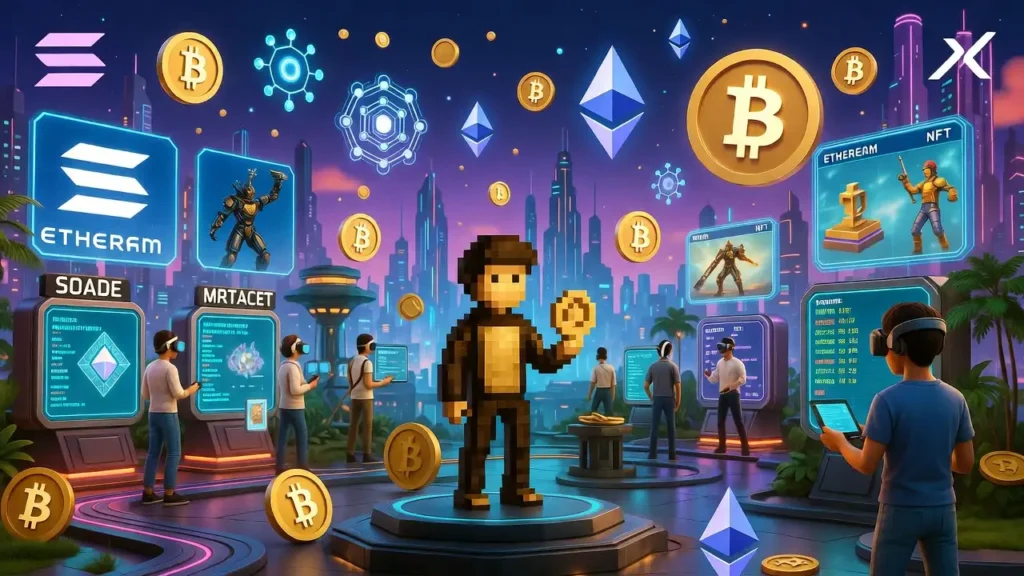
Web3 gaming represents a new generation of games built on blockchain technology. Unlike traditional games, where in-game items exist only in a centralized server controlled by the publisher, Web3 games give players true ownership of digital assets. Through NFTs (non-fungible tokens), players can buy, sell, and trade items — or even move them across compatible games.
In a traditional gaming scenario:
- Purchase skins, weapons, or characters.
- Ownership is limited to the game.
- Items vanish if the game closes or servers shut down.
In Web3 gaming:
- Assets live on-chain.
- Ownership is verifiable and transferable.
- Players can monetize, trade, or even use assets in other games.
This shift is redefining what it means to “own” a digital item, creating the foundation for a player-driven economy.
Why Web3 Gaming Matters
Web3 gaming introduces three transformative elements:
- True Ownership:
NFTs ensure your assets belong to you, not the game company. If you earn a rare sword or a unique character, it’s stored securely in your digital wallet. - Decentralization:
Community governance is growing. Some games allow players to vote on updates, game rules, and even treasury spending through DAOs (Decentralized Autonomous Organizations). - Player Economies:
The rise of play-to-earn (P2E) models and token rewards means that playing games can be a legitimate income source. Players can earn tokens, participate in marketplaces, and engage in cross-game economies.
Web 3 Gaming Market Size
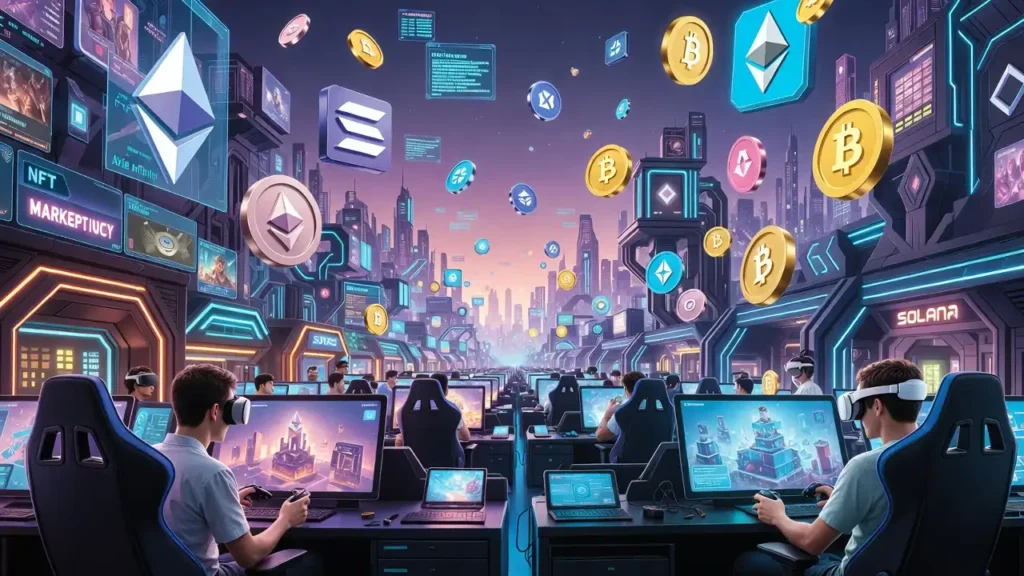
As of 2026, the Web 3 gaming market is estimated at $37 billion, projected to surpass $183 billion by 2034. Adoption is no longer limited to enthusiasts — AAA studios, investors, and mainstream gamers are entering the space, creating a healthy ecosystem of gameplay and financial incentives.
Core Technologies Behind Web3 Games
Web3 gaming is powered by blockchain and decentralized systems. Understanding the technology behind it is crucial.
Blockchain Networks
The backbone of Web3 games lies in blockchain networks, which provide security, transparency, and immutability.
- Ethereum (ETH): The most popular blockchain for NFTs and smart contracts. Known for high security but higher gas fees.
- Solana (SOL): Fast and cost-effective, ideal for large-scale game interactions.
- Polygon (MATIC): A layer-2 scaling solution for Ethereum, reducing transaction costs and speeding up trades.
- Ronin: Custom-built for gaming, particularly successful with games like Axie Infinity.
Each blockchain has trade-offs between speed, cost, decentralization, and ecosystem support.
NFTs & True Ownership
NFTs are unique tokens representing digital assets:
- In-game items: Skins, characters, weapons, vehicles
- Virtual land: Plot ownership in metaverse games
- Collectibles & achievements: Tradable and verifiable
NFT ownership allows players to monetize their gaming skills, moving beyond mere entertainment.
Tokens: Utility, Governance, and Rewards
Web3 games often use multiple token types:
- Utility Tokens: Used for in-game purchases or upgrades.
- Governance Tokens: Allow players to vote on game updates or decisions.
- Reward Tokens: Earned through gameplay or achievements.
Proper tokenomics is essential; mismanaged economies have caused collapses in early P2E games.
Smart Contracts
Smart contracts automate transactions:
- Secure item trades
- Automatic reward distribution
- Community governance (DAOs)
They remove middlemen and increase transparency but require strong security to prevent hacks.
History & Evolution of Web3 Gaming
Understanding the past helps us predict the future.
2021: Axie Infinity Boom
- Web 3 gaming exploded with Axie Infinity.
- Players in developing countries earned real income through gameplay.
- Model relied on token incentives, creating speculative but high-reward economies.
2022: Crypto Winter Crash
- Token prices fell sharply.
- Overly aggressive play-to-earn models collapsed.
- Many projects failed due to reliance on new player inflows rather than sustainable gameplay.
2026: Fun-First Rebound
- Focus shifted from “earn-first” to fun-first gameplay.
- Hybrid models (free-to-play + optional Web3 layer) reduced barriers to entry.
- Key lessons: Games must entertain first, monetize second.
Top Web3 Games (February 2026)
Here are the leading games in 2026:
Overall Leaders
- Wildcard: Strategy card battler with NFT integration
- RavenQuest: MMORPG with play-to-own mechanics
- EDEN Discovery: Blockchain exploration game
- Gunnies: Shooter with cross-chain asset transfer
- Star Atlas: Space MMO combining blockchain and DeFi mechanics
Polygon Ecosystem
- Sunflower Land: Farming metaverse
- The Sandbox: Social metaverse with virtual land
- Nifty Island: Hybrid social and collectible game
Other Notables
- Axie Infinity: Still popular for veteran players
- Illuvium: Blockchain RPG with NFT creatures
- Gods Unchained: Competitive card game
- Pixels: Casual farming and crafting
Emerging Titles
- Fableborne: Action RPG with NFT loot
- Treeverse: Fantasy MMO ecosystem
Game Models & Economies
Play-to-Earn (P2E)
Players earn cryptocurrency by playing.
⚠ Challenge: Sustainability — overly generous token rewards without utility can crash economies.
Play-to-Own
Players receive NFTs, airdrops, or governance tokens, creating long-term value.
Free-to-Play Hybrids
2026 trend: games that onboard Web2 players with no upfront NFT costs, allowing optional Web3 integration later.
DAOs & Governance
DAOs let the player community decide:
- Game updates
- Feature prioritization
- Treasury management
This creates a shared ownership experience and strengthens community engagement.
Pros, Cons & Challenges
Pros
- Real asset ownership
- Player-driven economies
- Interoperability potential
Cons
- Token volatility
- High transaction fees on some chains
- Scams and rug pulls
- Regulatory uncertainty
Regulatory Hurdles
Governments are starting to regulate crypto gaming, with taxation, licensing, and anti-money-laundering rules becoming increasingly important.
Market Trends & 2026 Buzz
AI & Procedural Worlds
AI agents now:
- Generate dynamic quests
- Populate NPCs
- Build evolving procedural worlds
Layer 3 Scaling
Next-gen Layer 3 solutions aim to reduce latency and transaction costs, enabling AAA-quality blockchain games.
Funding Surge
Studios are raising $3M+ rounds, attracting institutional investors and strategic partners.
Leading Chains
- Polygon
- Ronin
- Solana
These chains host the most daily active wallets for gaming.
How to Get Started
- Wallet Setup:
- MetaMask, Phantom
- Start Free:
- Look for games with no upfront NFT purchase
- Focus on fun first, earn later
- Explore Marketplaces:
- OpenSea, Magic Eden
- Beginner Tips:
- DYOR (Do Your Own Research)
- Start small
- Avoid hype-driven purchases
Development & Building
Tools
- Unity + Web3 SDKs
- NFT integration standards
- Wallet APIs
Chains for Developers
- Solana for speed
- Polygon for ecosystem support
- Ronin for gaming-specific features
5 Keys to Successful Game Development
- Gameplay-focused design
- Sustainable tokenomics
- Clear utility for NFTs
- Strong community engagement
- Long-term vision
Future Outlook & Resources
Predictions
- $180B+ Web3 gaming market by 2034
- AAA hybrids combining Web2 graphics + Web3 ownership
- Invisible blockchain UX, making blockchain seamless to users
Recommended Resources
- DappRadar – Analytics & rankings
- PlayToEarn.net – Game directories
- BlockchainGamer.biz – News & insights
Communities
- X (Twitter) Web3 threads
- Discord DAOs
- Developer Telegram groups
Final Thoughts
Web3 gaming in 2026 is more structured, fun-first, and sustainable. Success won’t be dictated by hype but by:
- Community engagement
- Sustainable tokenomics
- Game quality
The future isn’t “Web2 vs Web3” — it’s about great games with optional ownership layers.